Nigerian content creator and streamer Carter Efe has shared his perspective on how music influences audience engagement on digital platforms. His recent comments have generated discussions among fans and followers, particularly around the role of popular artists in boosting online visibility.
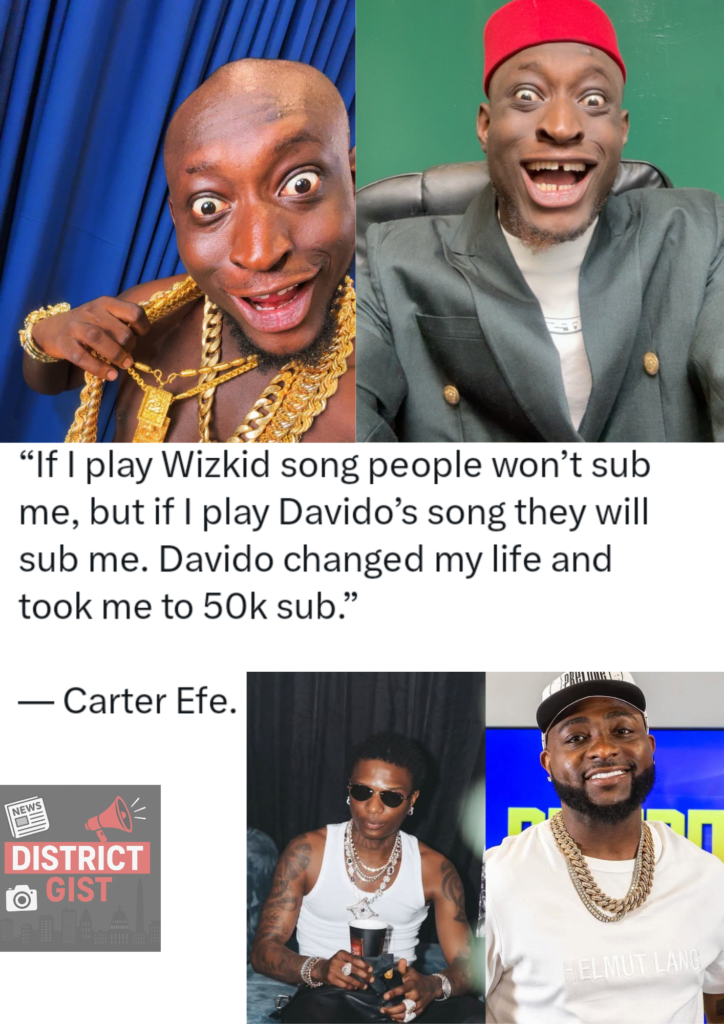
During a live session, Carter Efe explained that different types of music content tend to attract varying levels of audience response. According to him, he has observed a noticeable difference in subscriber growth depending on the songs he features during his streams. He stated that playing songs by certain artists has led to a higher number of new followers joining his platform.
In particular, he mentioned Nigerian music star Davido as having a strong impact on his channel’s growth. Carter Efe noted that whenever he plays Davido’s songs, he tends to see an increase in subscriber activity. He credited this pattern as one of the factors that contributed to his ability to reach approximately 50,000 subscribers, marking a significant milestone in his content creation journey.
At the same time, he referenced the music of Wizkid, noting that, based on his personal experience, it did not generate the same level of immediate subscriber response on his platform. However, his comments were not presented as a direct comparison of the artists’ overall success or influence, but rather as an observation related to his specific audience and content style.
Carter Efe’s remarks have drawn a wide range of reactions across social media. Many fans have engaged in conversations about the influence of different artists on digital engagement, with some agreeing with his observations and others offering alternative viewpoints. Supporters of both artists have shared their opinions, highlighting the diverse ways in which music connects with audiences.
Industry observers note that audience engagement on digital platforms can vary depending on multiple factors, including content format, audience demographics, timing, and the overall presentation of material. As a result, the performance of specific songs or artists within a content creator’s platform may reflect the preferences of that particular audience rather than a general measure of popularity.
The discussion also highlights the growing relationship between the music industry and digital content creation. Streamers and influencers often incorporate music into their content to enhance engagement, create entertainment value, and connect with their audiences. In turn, popular songs can benefit from increased exposure, reaching new listeners through online platforms.
Davido and Wizkid are both widely recognized as leading figures in the global rise of Afrobeats. Their contributions to the music industry have helped position Nigerian music on the international stage, with both artists achieving significant success through chart-topping releases, global tours, and collaborations with international acts. Their fan bases extend across multiple regions, reflecting the global appeal of African music.
Carter Efe’s comments serve as an example of how individual experiences can shape perspectives within the digital entertainment space. While his observations are specific to his platform, they have contributed to broader conversations about influence, audience behavior, and the role of music in online growth.
As digital platforms continue to expand, the connection between content creators and music artists is expected to remain an important aspect of the entertainment industry. Creators often rely on popular culture to engage audiences, while artists benefit from the visibility provided by these platforms.
Ultimately, the discussion highlights the diversity of audience preferences and the evolving nature of digital entertainment. While different creators may experience varying results depending on their content choices, the continued growth of Nigerian music globally demonstrates the strong influence of artists like Davido and Wizkid.
As conversations continue, fans and observers alike remain engaged in exploring how music, culture, and digital platforms intersect to shape modern entertainment experiences.